6th International Philosophical Dialogue “East–West” Successfully Held in North Macedonia

The 12th International Scientific Conference “International Dialogue: EAST–WEST” Was Held
5 June 2021
The 13th International Scientific Conference “International Dialogue: EAST–WEST” Was Held in Sveti Nikole
11 June 2022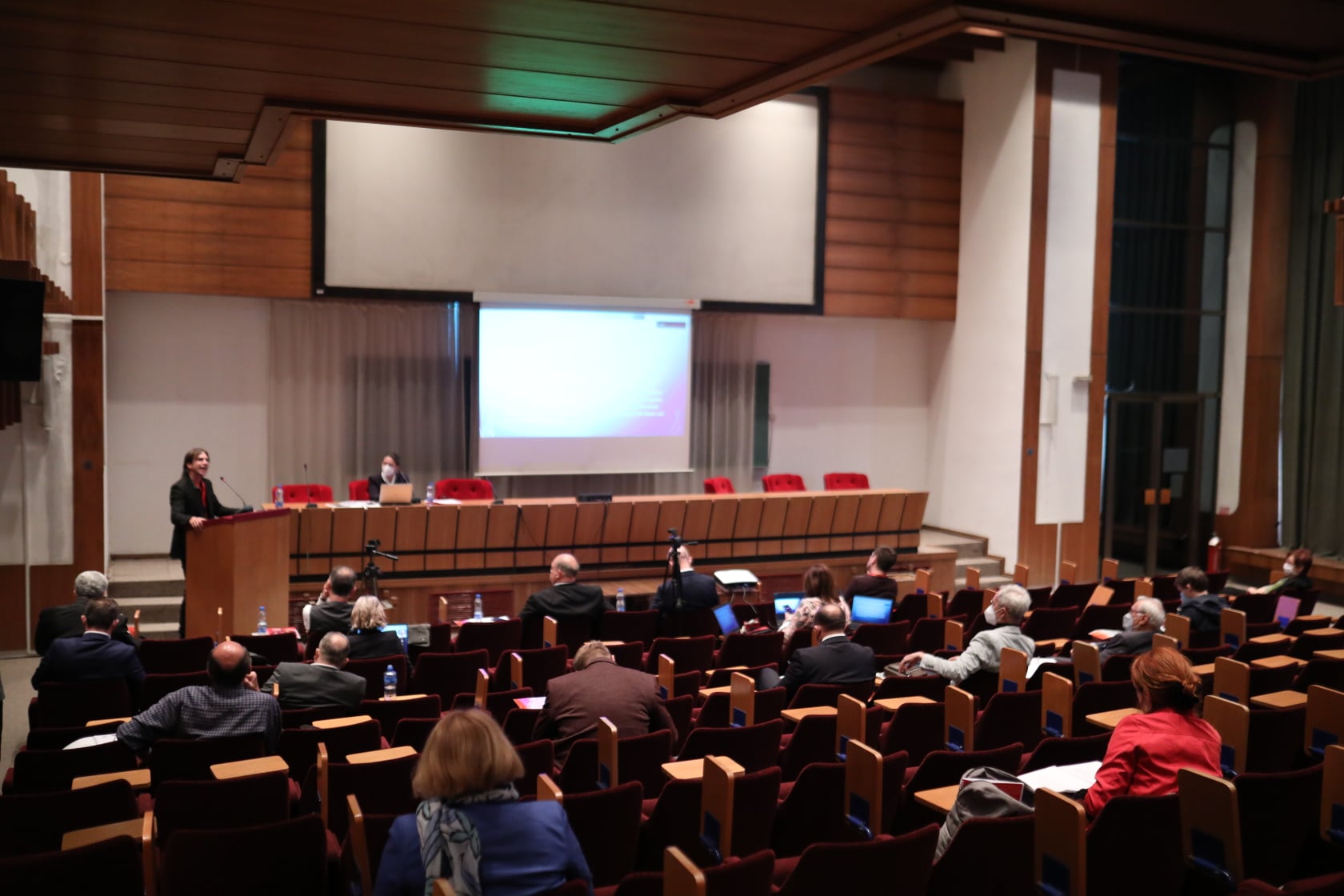
The 6th International Philosophical Dialogue “East–West” was successfully held from 6 to 8 October 2021 in Skopje and Sveti Nikole, North Macedonia, bringing together around 20 distinguished philosophers, academics, and researchers from the USA, Serbia, Russia, Slovenia, Croatia, Belgium, Greece, Austria, Bosnia and Herzegovina, Germany, Hungary, and North Macedonia.
The conference was jointly organized by the Macedonian Academy of Sciences and Arts (MANU), International Slavic University “G. R. Derzhavin”, the Faculty of Philosophy at Ss. Cyril and Methodius University in Skopje, and the Philosophical Society of Macedonia.
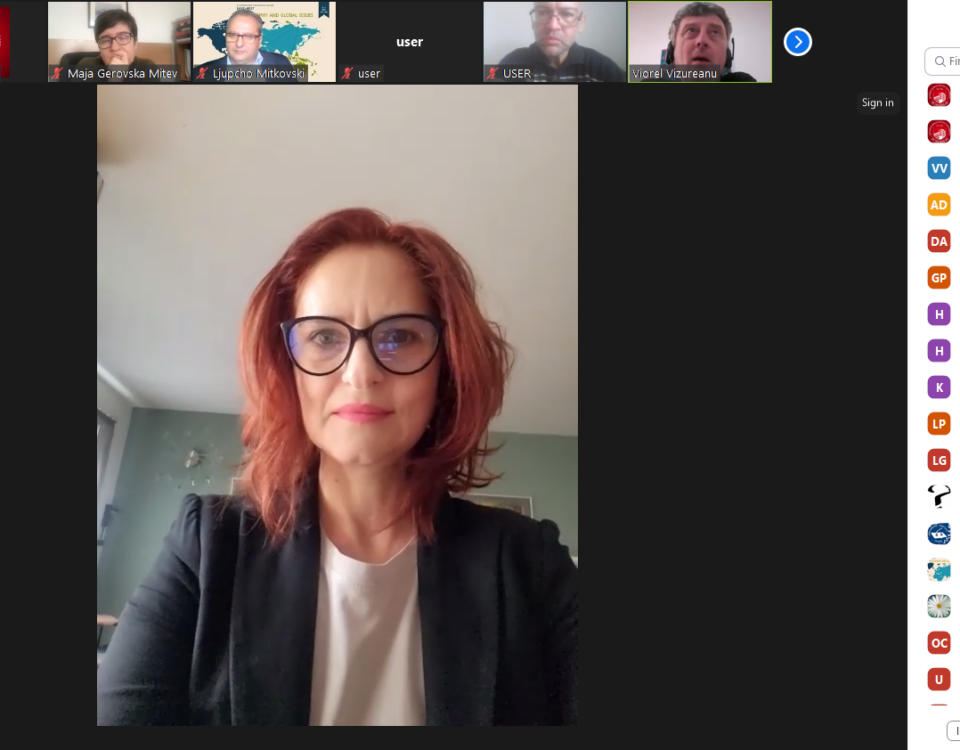
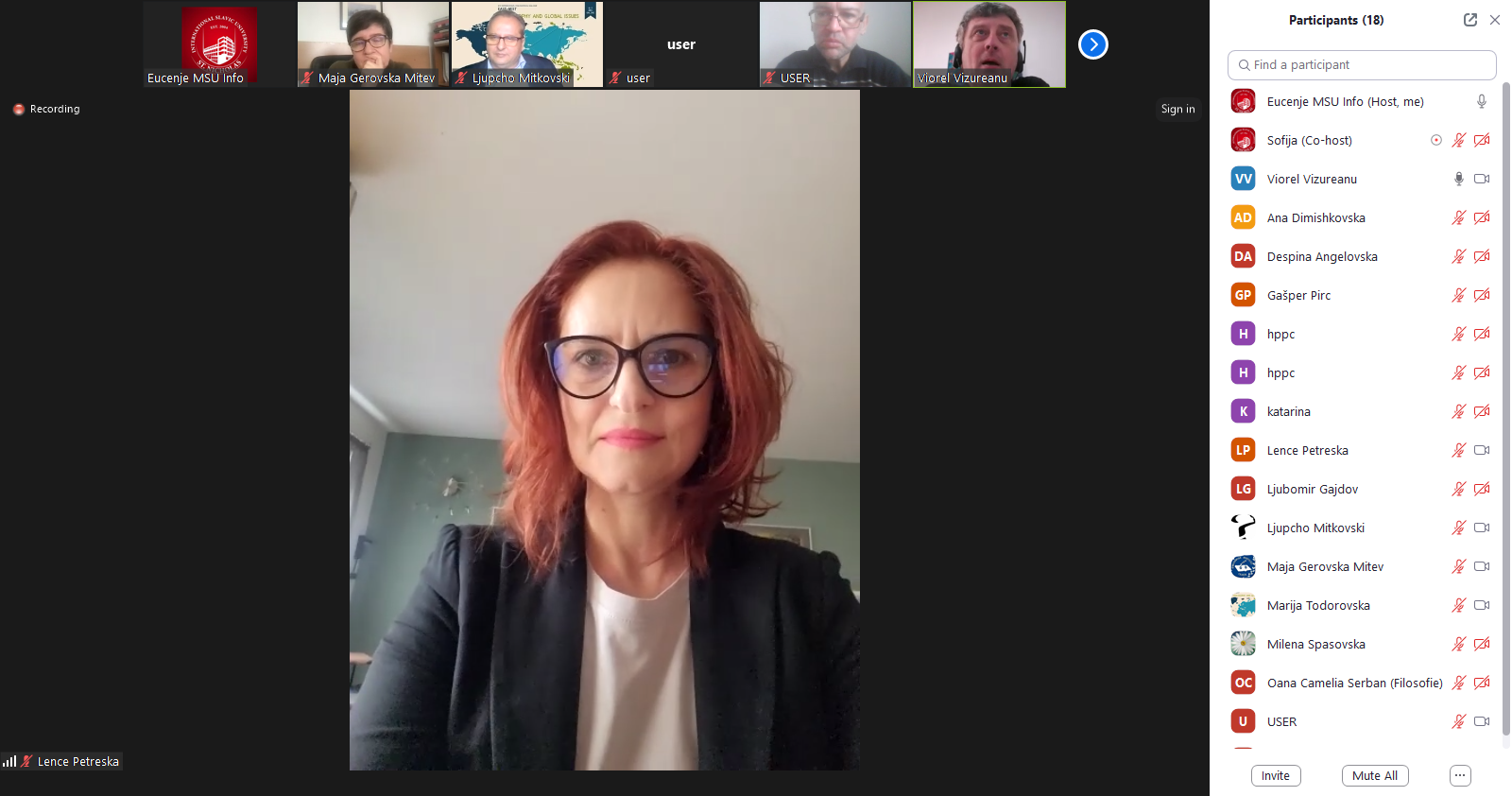
Originally scheduled for 2020, the sixth edition was postponed due to the COVID-19 pandemic. The conference was subsequently organized in a hybrid format, allowing participants to attend in person or join the discussions and ask questions through Zoom.
The central theme of the 2021 edition was “Philosophy of Memory”, exploring the philosophical, historical, cultural, ethical, and political dimensions of individual and collective memory.
Opening Ceremony and First Session – 6 October 2021
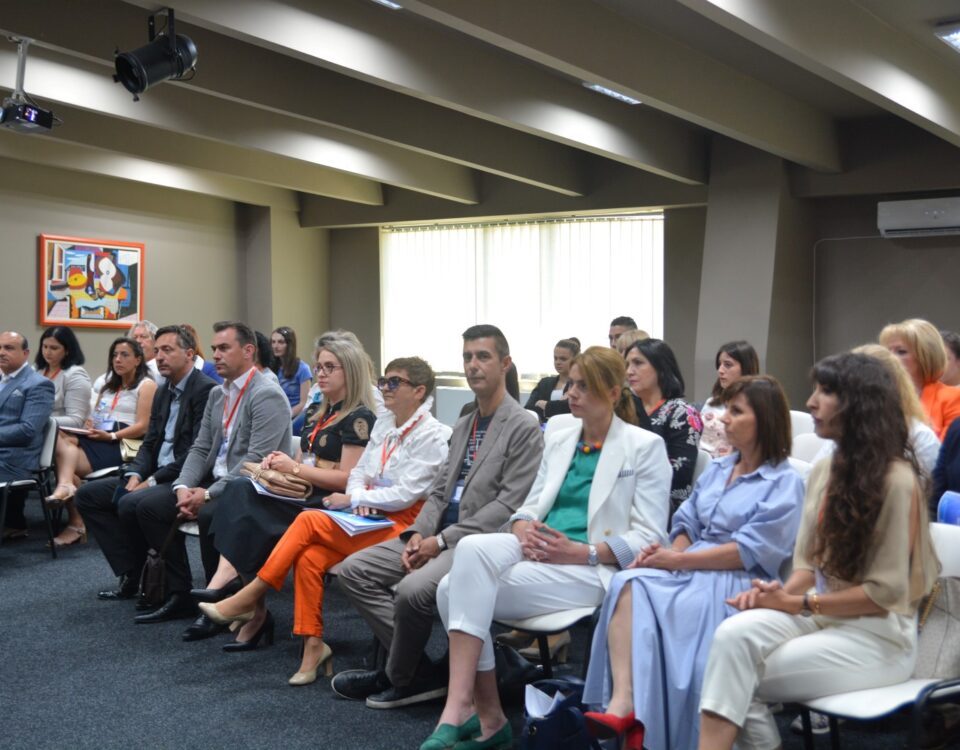
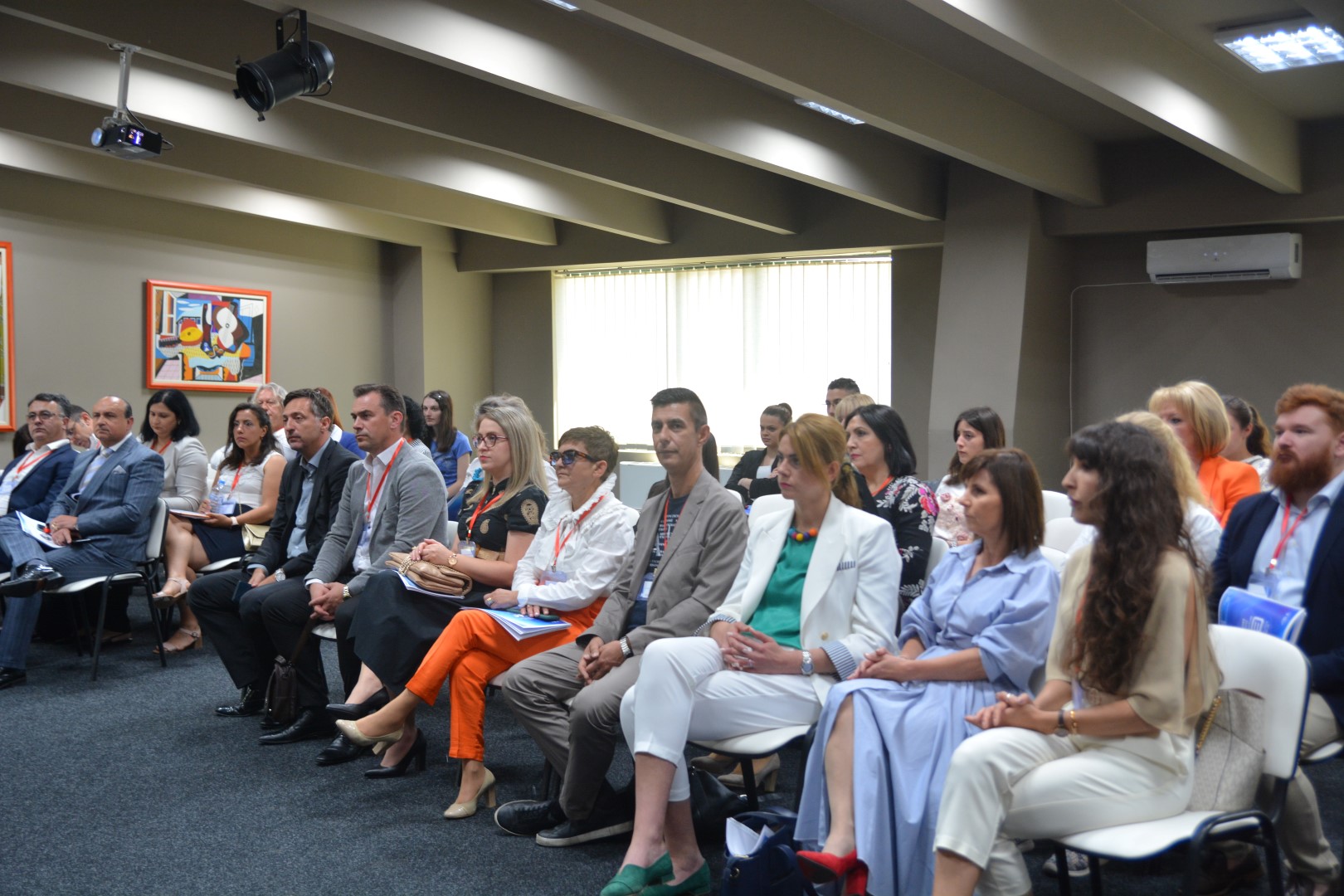
The conference officially opened on 6 October 2021 at 11:00 AM at the Macedonian Academy of Sciences and Arts (MANU) in Skopje.
The opening ceremony featured welcoming addresses by:
- Academician Vlado Kambovski, Macedonian Academy of Sciences and Arts
- Prof. Dr. Jordan Gjorchev, President of the Management Board of International Slavic University
- Prof. Dr. Ana Dimishkovska, Head of the Institute of Philosophy at Ss. Cyril and Methodius University
- Ljupcho Mitkovski, President of the Philosophical Society of Macedonia

The first academic session addressed the role of memory in political culture, philosophical thought, social recognition, and historical interpretation.
Presentations were delivered by:
- Prof. Dr. Dragan Prole, University of Novi Sad, Serbia — “Political Culture of Collective Memory”
- Prof. Dr. Konstantin Shevtsov, Saint Petersburg State University of Civil Aviation, Russia — “The Presence Distributed in the World: About the Truth of Memory”
- Asst. Prof. Dr. Gašper Pirc, AMEU – Institutum Studiorum Humanitatis, Ljubljana, Slovenia — “Memory and Social Recognition in the Current Social and Political Climate”
- Ljubomir Gajdov, Faculty of Law “Iustinianus Primus”, Ss. Cyril and Methodius University, North Macedonia — “Holocaust Memory Between Revision and Culture of Remembering”


Second and Third Sessions — 7 October 2021
The conference continued on 7 October 2021 at International Slavic University “G. R. Derzhavin” in Sveti Nikole, where the second and third academic sessions took place.
Beginning at 10:00 AM, the second session explored cultural memory, national identity, historical narratives, and the politics of remembrance.
Speakers included:
- Ksenia Trofimova, Institute of Ethnology and Anthropology, Russian Academy of Sciences, Russia — “Spiritual Continuity and the Way of Things: Discussing the Past While Creating Muslim Networks in Romani Communities”
- Prof. Dr. Zrinka Blažević, University of Zagreb, Croatia — “Tears and Memories of the Nation: Poetics of Memory and Aesthetics of Mourning in the First Croatian National Epos”
- Prof. Dr. Vjeran Pavlaković, University of Rijeka, Croatia — “Mixing the Dough for the Bread of Reconciliation: Croat-Serb Relations and Croatia’s Commemorative Culture”
- Ana Milošević, Leuven Institute of Criminology, KU Leuven, Belgium — “The Effects of Europeanisation on Memory Politics in the Balkans”
The session was moderated by Naum Trajanovski, PhD candidate at the Graduate School for Social Research, Institute of Philosophy and Sociology, Polish Academy of Sciences in Warsaw.
The third session began at 4:00 PM and focused on autobiographical memory, personal and collective identity, philosophical interpretations of the past, and ethical responsibility.
Presentations were delivered by:
- Assoc. Prof. Dr. Evangelos D. Protopapadakis, National and Kapodistrian University of Athens, Greece — “Messing with Autobiographical Memory: Reconsolidation, Identity, and Moral Status”
- Luka Trebežnik, Science and Research Centre Koper, Slovenia — “Deconstruction of the Anamnestic Philosophy”
- Prof. Dr. Boško Karadžov, North Macedonia — “Forbidden Memory and Hauntology of the Past”
- Assoc. Prof. Dr. Darko Đogo, University of East Sarajevo, Bosnia and Herzegovina — “Do We Remember the World Before: Post-Modernism of One Disease: Anthropos, Cosmos, Polis and Pandemic”
- Achilleas Kleisouras, National and Kapodistrian University of Athens, Greece — “Remembering Through Comics: The Quest for Personal and Collective Identity in Art Spiegelman’s Graphic Novel Maus”


Fourth and Final Session – 8 October 2021
The fourth and final session took place on 8 October 2021 at 11:00 AM at International Slavic University in Sveti Nikole.
The concluding discussions explored the intersections of historical memory, political identity, nationalism, populism, and collective remembrance.
The following researchers presented their work:
- Jody Jensen, Director of the Polányi Centre, Institute of Advanced Studies Kőszeg, Hungary — “Editorial Introduction to the Volume: Logic, Messages and Overview of the Process”
- Igor Stipić, University of Regensburg, Germany, and Institute of Advanced Studies Kőszeg, Hungary — “Whose Is Herceg Kosača? Populist Memory Politics of Constructing ‘Historical People’ in Bosnia and Herzegovina”
- Marija Ivanović, University of Sarajevo, Bosnia and Herzegovina — “Of (Anti)Fascists and (Anti)Communists: Constructing the People and Its Enemies at the Partisan Memorial Cemetery in Mostar”
- Astrea Pejović, Central European University, Budapest and Vienna — “The ‘War for Peace’: Commemoration of the Bombing of Dubrovnik in Montenegro”
- Dimitar Nikolovski, Center for European Strategies – Eurothink, North Macedonia — “Integration Versus Identity: Memory Politics, Populism and the Good Neighborliness Agreement Between North Macedonia and Bulgaria”
- Filip Ljapov, Central European University, Budapest and Vienna — “Lukov March as a ‘Template of Possibility’ for Historical Revisionism: Memory, History and Populism in Post-1989 Bulgaria”


Three Days of International Academic Dialogue
Over three days, the 6th International Philosophical Dialogue “East–West” provided a platform for academic exchange, bringing together scholars from different countries and disciplines to examine the significance of memory in shaping individual identities, collective histories, political narratives, and contemporary societies.
The discussions demonstrated the importance of philosophical reflection and interdisciplinary research in understanding the relationship between the past and the present.
Through its continued cooperation with leading academic and scientific institutions, International Slavic University reaffirmed its commitment to promoting international scientific dialogue, strengthening academic partnerships, and supporting the exchange of knowledge across cultural and philosophical traditions.